


Table of Contents
- Why Fabric Choice Determines How Long Your Graphics Last
- Cotton vs Polyester T-shirts: Which Holds Prints Better
- Best Fabric for Shirt Printing: Construction and Weight Matter
- Heavyweight T-shirt Fabric: Why 220 GSM Outperforms Lighter Weights
- How to Care for Graphic Tees to Preserve Prints in Tropical Climates
- Durability Testing: What Actually Happens After Repeated Washing
- 404Wear's 220 GSM Cotton-Poly Blend: Built for Durability
- Conclusion: Choose Fabric That Matches Your Wear Pattern
- Frequently Asked Questions
Last Updated: October 16, 2026
Why Fabric Choice Determines How Long Your Graphics Last
The difference between a graphic tee that looks fresh for years and one that fades after a few washes comes down to choosing durable fabrics graphic tees with the right construction and materials. At 404Wear, we've learned that durable fabrics for graphic tees aren't just about the base material, they're about the entire construction, weight, and how the fabric interacts with printing methods.
Most people assume all cotton t-shirts are created equal. They're not. The fiber length, yarn construction, and fabric weight dramatically affect how well prints adhere, how the garment holds up through repeated washing, and whether the graphic stays vibrant or cracks and fades. In tropical climates like Sri Lanka's, where humidity and frequent washing are the norm, fabric choice becomes even more critical.
This guide breaks down exactly what makes a fabric durable for graphic tees, what construction methods matter most, and how to preserve prints through proper care. We'll also explain why some fabrics outperform others in humid conditions, a crucial consideration for anyone buying streetwear in a tropical environment.
Cotton vs Polyester T-shirts: Which Holds Prints Better
The core choice in cotton vs polyester T-shirts shapes everything that comes after. Each fiber type has distinct advantages and limitations when it comes to print durability.
Cotton is the traditional choice for graphic tees. Natural fibers absorb ink better, which means screen-printed and direct-to-film graphics bond more effectively to the surface. This deeper ink penetration creates prints that feel like part of the fabric rather than sitting on top of it. The downside?
Polyester, by contrast, resists shrinkage and moisture absorption. It's synthetic, which means it doesn't absorb water the way cotton does. This makes polyester tees more stable in tropical climates. However, polyester requires different printing techniques.
The real answer? A cotton-polyester blend gives you the best of both worlds. A 60/40 or 50/50 blend combines cotton's superior ink absorption with polyester's moisture resistance and shape retention. The polyester stabilizes the garment in humidity, while the cotton ensures prints adhere properly and maintain vibrancy.
| Fiber Type | Ink Absorption | Shrinkage Risk | Moisture Resistance | Best For |
|---|---|---|---|---|
| 100% Cotton | Excellent | High | Poor | Premium prints, dry climates |
| 100% Polyester | Poor | None | Excellent | Durability in humidity |
| Cotton-Poly Blend (60/40) | Very Good | Low | Very Good | Tropical wear, all-day comfort |
| Cotton-Poly Blend (50/50) | Good | Minimal | Excellent | Maximum durability |
Best Fabric for Shirt Printing: Construction and Weight Matter
When choosing the best fabric for shirt printing, weight and construction method are just as important as fiber content. Two tees can be 100% cotton and perform completely differently based on how the yarn is spun and how tightly the fabric is knit.
Fabric weight is measured in grams per square yard (GSM). This single number tells you how dense and durable the fabric is. A 150 GSM shirt feels paper-thin and will show wear quickly. A 220 GSM shirt feels substantial, holds its shape, and can handle repeated washing without degradation. For graphic tees, heavier isn't always better, it depends on your climate and wear pattern.
Ring-Spun vs Standard Cotton
The difference between ring-spun and standard cotton comes down to how the yarn is twisted. Ring-spun cotton is twisted more tightly around a ring, creating a smoother, stronger yarn. This tighter twist makes the fabric softer, more durable, and better at holding dyes and ink. Ring-spun cotton also has fewer loose fibers on the surface, which means prints sit more evenly and resist pilling.
Standard cotton is spun faster and less tightly. It's cheaper to produce, but the looser yarn creates a fuzzier surface. Prints can catch on these loose fibers, and the fabric pills more easily under wear. For graphic tees, ring-spun cotton is the premium choice, it costs more but delivers noticeably better print durability and longevity.
Fabric Weight and GSM Explained
Fabric weight, measured in GSM (grams per square yard), directly impacts durability. Here's what different weights mean in practice:
- 150-170 GSM: Lightweight, breathable, feels soft. Prone to thinning in high-wear areas after 20-30 washes.
- 180-200 GSM: Mid-weight, balanced comfort and durability. Holds up well for 50+ washes with proper care.
- 220+ GSM: Heavyweight, substantial feel, excellent durability. Can withstand 100+ washes without visible wear.
For tropical climates, the instinct is to choose lightweight fabric for breathability. But there's a tradeoff: lighter fabrics thin out faster, prints crack more easily as the weave loosens, and the garment loses shape sooner. A well-made 200-220 GSM fabric in a cotton-poly blend actually breathes better than a 150 GSM pure cotton shirt, because the polyester component wicks moisture away from the skin rather than absorbing it.
Heavyweight T-shirt Fabric: Why 220 GSM Outperforms Lighter Weights
Heavyweight T-shirt fabric at 220 GSM is the sweet spot for graphic tees that need to survive repeated washing in humid conditions. This weight provides structural integrity without feeling stiff or uncomfortable.
At 220 GSM, the fabric has enough density that it doesn't thin out in high-wear areas like the shoulders, chest, and armpits. This density also means the weave stays tight, which prevents prints from cracking as the fabric flexes.
The weight also affects how the graphic sits on the fabric. On lightweight shirts, the print can feel like it's floating on top. On 220 GSM fabric, the print integrates with the garment and moves with it. This means less cracking, less peeling, and better color retention.
In Sri Lanka's tropical climate, 220 GSM might seem heavy, but the construction matters more than the weight alone. A 220 GSM cotton-poly blend actually breathes better than a 170 GSM pure cotton shirt, because the polyester component wicks moisture away rather than trapping it against your skin.
How to Care for Graphic Tees to Preserve Prints in Tropical Climates
Fabric choice sets the foundation for durability, but care determines whether your graphic tee actually lasts. In tropical climates, humidity and frequent washing are facts of life, so your care routine must account for these conditions.
Turn the shirt inside-out before washing. This protects the graphic from direct friction with other garments and reduces the pressure on the ink. Wash in cold water, which prevents dye bleeding and reduces stress on the fibers.
Avoid tumble drying. The heat and friction in a dryer accelerate print cracking and cause the fabric to shrink. Air-dry flat or hang-dry instead.
Never iron directly over the graphic. Heat breaks down the ink bond and can cause permanent damage. If you need to press the shirt, use a pressing cloth or iron the back side only.
In humid climates, graphics can absorb moisture and develop mildew if they're not dried completely. Ensure the shirt is fully dry before storing it. If you notice any dampness, hang it in a well-ventilated area, don't fold it away damp.
Durability Testing: What Actually Happens After Repeated Washing
Real durability testing shows what actually happens to graphic tees after dozens of washes. The results reveal why fabric choice and construction matter so much.
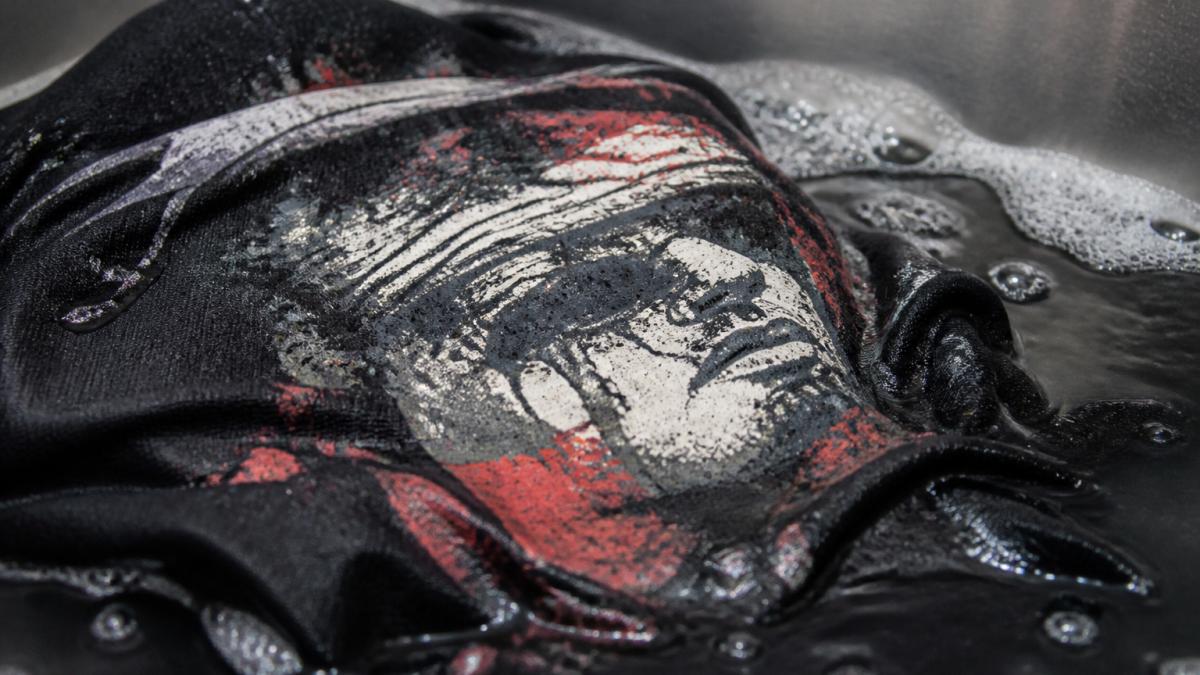
A 150 GSM pure cotton shirt with a standard print typically shows visible print cracking after 20-30 washes. The weave loosens, the ink loses adhesion, and the graphic begins to peel at the edges. By 50 washes, the print is noticeably faded and cracked.
A 200 GSM cotton-poly blend with a quality print holds up significantly better. The tighter weave resists loosening, and the polyester component stabilizes the fabric. These shirts typically show minimal print degradation through 75-100 washes.
A 220 GSM cotton-poly blend with a properly cured print can last 150+ washes without significant wear.
The difference isn't subtle. A cheap graphic tee might last 20-30 washes before the print cracks. A properly constructed heavyweight tee lasts 5-10 times longer.
404Wear's 220 GSM Cotton-Poly Blend: Built for Durability
At 404Wear, we've chosen 220 GSM soft cotton-poly blend as the standard for all our graphic tees because it's the only weight that makes sense for streetwear that's meant to be worn, not displayed. Our designs like Gimme The Loot, SPEED ADDICT, and STREET KINGS are printed on this fabric specifically because it handles the realities of daily wear in a tropical climate.


The 220 GSM weight means the fabric won't thin out after a season of regular washing. The cotton-poly blend ensures the garment stays stable in humidity while allowing prints to bond properly. The fabric breathes, it doesn't feel heavy or stiff, because the polyester component actively wicks moisture away from your skin.
Our printing process is matched to the fabric. We use high-quality printing with proper curing, which means the ink bonds with the fabric rather than sitting on top of it. This method works because we've chosen a fabric dense enough to hold the ink without cracking as the garment moves and flexes.
The care instructions matter as much as the fabric itself. We recommend cold-water washing inside-out and air-drying to preserve the print intensity. Follow those steps, and a 404Wear graphic tee will look fresh for years, not because we make miraculous claims, but because the fabric and print method are engineered to last.
Conclusion: Choose Fabric That Matches Your Wear Pattern
The best durable fabrics graphic tees aren't a mystery. A 220 GSM cotton-poly blend, printed with quality methods, will outlast lighter alternatives by years. But durability also depends on your wear pattern and climate.
If you live in a tropical environment and wear graphic tees regularly, heavyweight fabric is essential. If you wear them occasionally in a dry climate, a 180-200 GSM blend works fine. The key is matching the fabric to your actual use case rather than buying whatever's cheapest.
404Wear's graphic tees are built on this principle. Every design is printed on 220 GSM soft cotton-poly blend and cured properly to ensure prints survive repeated washing. When you shop new arrivals, you're getting fabric engineered for durability, not just a cheap tee with a cool graphic. That difference becomes obvious after the first 30 washes, when other brands' prints start cracking, ours still look fresh.
Frequently Asked Questions
What is the most durable fabric for graphic tees?
A cotton-polyester blend at 220 GSM (grams per square yard) offers the best durability for graphic tees. The polyester adds strength and shape retention, while cotton provides breathability. 404Wear uses this exact specification across its collection to ensure prints survive repeated washing in Sri Lanka's humid climate.
How does cotton vs polyester T-shirt performance differ for prints?
Pure cotton absorbs ink better but shrinks more and pills with wear. Polyester resists shrinkage and pilling, making graphics stay vibrant longer, but can feel less breathable. A 50/50 or 60/40 cotton-polyester blend balances both: cotton absorbs ink, polyester prevents shape loss and extends print life. In tropical climates like Sri Lanka's, the polyester component also reduces moisture retention, keeping the garment fresher between washes.
Why does fabric weight matter for graphic tee durability?
Heavier fabric (220 GSM) has more fiber density, so it resists thinning, tearing, and pilling from repeated wear and washing. Lightweight fabric (under 160 GSM) stretches and breaks down faster, causing prints to crack as the base fabric weakens. At 220 GSM, the garment maintains its shape and structure through dozens of washes, keeping the printed graphic intact longer.
How should you wash graphic tees to prevent fading and cracking?
Wash inside-out in cold water to protect the print from friction and heat. Use a gentle cycle, avoid bleach, and skip the dryer, air dry to prevent shrinkage and ink breakdown. Tumble drying creates heat and friction that crack prints and degrade fibers. For 404Wear graphic tees, cold inside-out washing extends print life significantly, especially in humid climates where moisture can weaken ink adhesion if the garment isn't dried properly.

