


Last Updated: October 28, 2026
Quick Summary
To keep streetwear shape after washing, wash cold on a short, delicate cycle at the lowest spin speed, then dry flat and reshape the garment while it is still damp. Skip the dryer entirely, since hot water and hot air together cause the most shrinkage. Never hang a wet tee, because water weight drags the shoulder seams down.
- Read the care label first, every time, because it overrides every general rule online.
- Use one or two garments per mesh laundry bag, maximum, to avoid overfilling.
- Spot clean small marks and air garments overnight to wash less often.
- Dampen a shrunk or stretched piece, gently stretch it back, then dry flat.
- Dry oversized pieces flat and fold rather than hang them in storage.
Table of Contents
- Why Streetwear Loses Its Shape in the Wash
- What You Need Before You Start
- Step 1: Read the Care Label and Sort by Fabric
- Step 2: Turn Garments Inside Out and Use a Mesh Laundry Bag
- Step 3: Wash Cold on a Short, Delicate Cycle
- Air Drying vs Machine Drying Streetwear
- Preventing Shrinkage in Streetwear
- How to Make Streetwear Last Longer: Fabric-by-Fabric Care
- Frequently Asked Questions
Why Streetwear Loses Its Shape in the Wash
A heavyweight tee that collapses at the neckline loses more than its fit. It loses the reason you paid for it.
Streetwear shape is the structure a garment holds after washing: the neckline, the shoulder line, the hem, and the overall drape. Heat, friction, and stretching are what break it down. Hot water relaxes cotton fibres. A fast spin cycle pulls them out of line. Hanging a soaked tee on a hanger drags the shoulders down under their own weight.
What You Need Before You Start
You don't need a new machine or expensive products. You need a few cheap tools and one habit: reading the label before anything touches water.
Here's your kit:
- A mesh laundry bag, sized for one or two garments
- A gentle or delicate detergent, not a harsh powder
- A drying rack or a flat drying surface
- A clean towel for blotting
- A tape measure, if you want to track shrinkage
Skip the fabric softener. It coats fibres and reduces absorbency, which matters in a hot, humid climate where breathability is the whole point of a good tee.
Step 1: Read the Care Label and Sort by Fabric
The care label is the manufacturer's instruction sheet, and it overrides every general rule online. Read it first, every time.
Matching Machine Settings to Care Labels
| Care Label Says | Machine Setting | Water Temp |
|---|---|---|
| Machine wash cold | Delicate or gentle | Cold |
| Machine wash warm | Normal, short cycle | Warm |
| Hand wash only | Hand wash or delicate bag | Cold |
| Do not tumble dry | Air dry only | N/A |
Step 2: Turn Garments Inside Out and Use a Mesh Laundry Bag
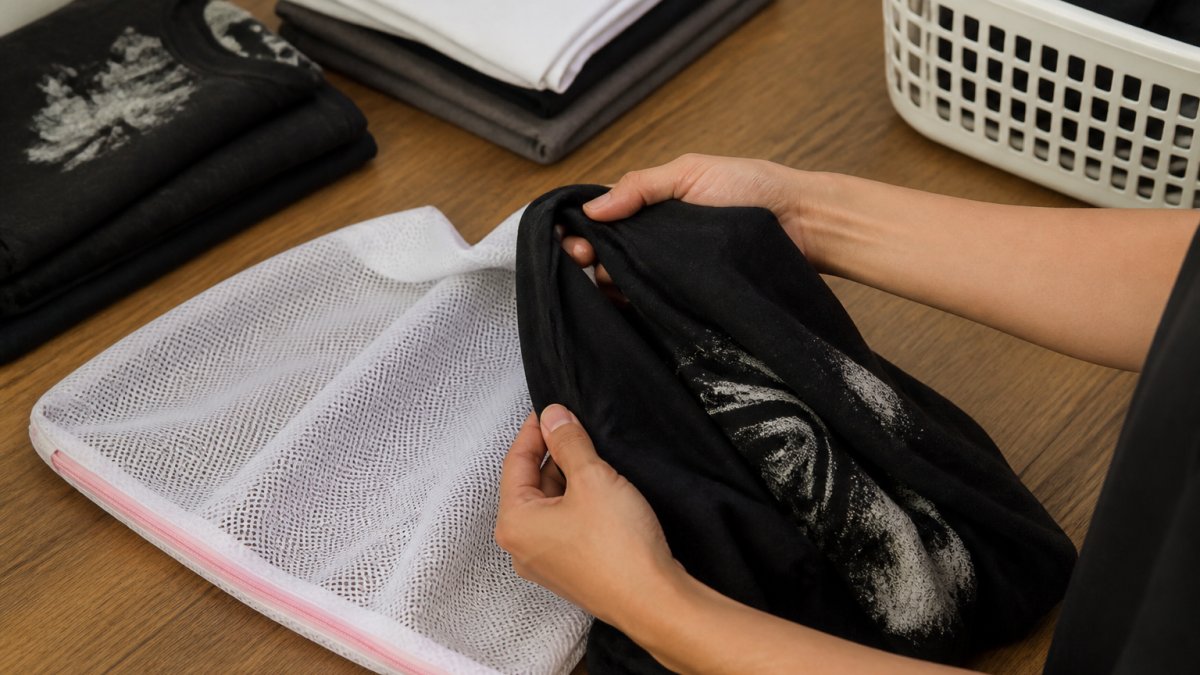
Watch out: overfilling a mesh bag defeats the purpose. One or two garments per bag, maximum.
Step 3: Wash Cold on a Short, Delicate Cycle
Cold water and a short cycle are the two settings that protect shape best. Cold water keeps cotton fibres from relaxing and shrinking. A short cycle means less agitation, and agitation is what pulls a garment out of shape.
Use the lowest spin speed your machine offers. High spin forces water out fast, but it also twists fabric and sets wrinkles that are hard to press out later.
Spot Cleaning Instead of a Full Wash
Most streetwear doesn't need a full wash after one wear. Airing it out overnight handles light odour. For a small mark, spot cleaning saves the whole garment.
- Dab, don't rub, with a damp cloth and a drop of gentle detergent
- Work from the outside of the stain inward
- Rinse the spot with clean water and blot dry
- Let it air before wearing
Wash frequency matters. Every full wash is wear on the fibres, so wash less and spot clean more.
Air Drying vs Machine Drying Streetwear
Here's how the two compare:
| Factor | Air Drying | Machine Drying |
|---|---|---|
| Shrinkage risk | Low | High |
| Print protection | Strong | Weak |
| Time to dry | Longer | Fast |
| Energy use | None | Higher |
Flat Drying and Reshaping While Damp
Flat drying is the safest method for knits and heavyweight tees. See the Impact Lifestyle Shorts Pastel Pink Blue Edition whose fabric and fit depend on proper drying. Lay the garment on a clean towel or drying rack and smooth it into its original shape with your hands.
Reshape while it's still damp. Gently squeeze out excess moisture first, never wring. Then press the neckline, shoulders, and hem back into line. This is the moment you can correct a stretched collar or a twisted side seam.
Preventing Shrinkage in Streetwear
Preventing shrinkage in streetwear comes down to three controls: cold water, no dryer heat, and gentle handling. Cotton shrinks most when it meets hot water and hot air in the same wash-dry cycle, and the shrinkage is cumulative, a tee that loses 2% in one hot wash loses more in the next.
A few habits that help:
- Wash in cold water, always
- Skip the dryer entirely
- Never wring or twist to remove water
- Dry flat or hang in shade, not direct sun
- Pre-shrink new cotton pieces with one cold wash before you rely on the fit
Restoring Shape After Shrinkage or Stretching
If a piece has already shrunk, dampen it slightly and gently stretch it back while it's damp, then dry flat. It won't fully reverse a hot wash, but it recovers some length. Stretched-out collars respond to the same trick: dampen, reshape, dry flat.
How to Make Streetwear Last Longer: Fabric-by-Fabric Care
| Fabric | Wash Temp | Cycle | Dry Method | Main Shape Risk |
|---|---|---|---|---|
| Cotton jersey (180-220 gsm) | Cold | Delicate, short | Flat or hang in shade | Neckline stretch, hem warp |
| Cotton fleece (300-400 gsm) | Cold | Delicate, short | Flat | Hood collapse, cuff stretch |
| Heavyweight jersey (240 gsm+) | Cold | Delicate, short | Flat | Shoulder drop, body twist |
| Denim (10-14 oz) | Cold | Normal, short | Hang | Waistband shrink, seam twist |
| Rib knit (collars, cuffs) | Cold | Hand wash or mesh bag | Flat | Rib recovery loss |
| Synthetic blends (poly, elastane) | Cold | Delicate | Hang or flat | Heat-set wrinkles, elastane fatigue |
Caring for Oversized Fits and Structured Silhouettes
Oversized pieces need extra care because there's more fabric to stretch and more weight pulling on the shoulders. Browse lifestyle T-shirts to apply these fabric-by-fabric care habits to your own tees. Never hang a wet oversized tee. The water weight drags the shoulder seams down and the fit goes sloppy.

Dry oversized pieces flat, and fold rather than hang them in storage. Structured silhouettes hold their line best when folded loosely with space around them. Store them completely dry, away from damp, and they'll keep their shape between wears.
Frequently Asked Questions
Why does streetwear lose its shape after washing?
Heat and agitation are the main culprits. Hot water and a long, fast spin cycle relax cotton fibres and stretch necklines, cuffs and hems, while tumble drying adds heat that locks the damage in. Prints also crack when friction pulls at the ink. Washing cold, on a short delicate cycle, inside out and in a mesh bag limits all three, so the garment keeps its streetwear shape and the graphic stays flat.
Is it better to hand wash or machine wash heavy cotton streetwear?
A front-loading machine on a cold, short delicate cycle is usually gentler than hand washing, because hand wringing stretches wet cotton unevenly. If you hand wash, use cold water, press the water out with a towel instead of twisting, and never wring the neckline. Either way, skip fabric softener: it coats fibres and reduces absorbency, which matters in a tropical climate where breathability is the point.
How do I stop graphic prints from cracking during the wash?
For Gimme The Loot and SPEED ADDICT, follow the listed care instructions: cold wash inside-out, do not tumble dry, and do not iron the print.
How can I restore the shape of a stretched-out hoodie?
Soak the hoodie in cold water for 10 to 15 minutes, then press the excess moisture out with a towel, never wring it. Lay it flat, ease the cuffs, hem and neckline back to their original measurements, and let it air dry away from direct sun. For cotton-poly blends, mild heat from a steamer helps fibres settle. Repeat once if needed, and from then on dry flat to prevent the stretch returning.


