


Table of Contents
- Understanding Streetwear Footwear Fundamentals
- Best Sneakers for Streetwear: Key Styles That Work
- How to Match Sneakers With Outfits: A Practical Framework
- Boots With Streetwear Outfits: Beyond the Sneaker
- Footwear for Different Seasons and Weather
- Making Bold Shoes Your Outfit's Focal Point
- Durability and Comfort for All-Day Wear
- Frequently Asked Questions
Last Updated: October 11, 2026
Understanding Streetwear Footwear Fundamentals
Knowing what shoes to wear with streetwear outfits means matching your footwear to your silhouette and attitude. Your shoes either reinforce your statement or undermine it.
Good streetwear styling depends on how shoe volume, height, and color interact with your outfit.
The best footwear choices follow three core rules: proportion balance, color harmony, and occasion appropriateness.
Start with your silhouette, not your shoes. Are your trousers loose or fitted? Is your top oversized or tailored? Your shoes should either echo or contrast those proportions deliberately.
Best Sneakers for Streetwear: Key Styles That Work
Streetwear sneakers share specific characteristics: bold silhouettes, confident colorways, and visible construction details.
Chunky Runners and Oversized Silhouettes
Chunky runners dominate streetwear because they create visual weight that balances relaxed clothing, with thick soles and exaggerated proportions.
Pair chunky runners with:
- Baggy denim or loose trousers
- Oversized graphic tees
- Relaxed hoodies or oversized jackets
- Wide-leg cargo pants
If your shoe is voluminous, your silhouette should be equally relaxed. Chunky runners with fitted jeans look unbalanced; with baggy denim they feel intentional.
White chunky runners work with almost everything. Black ones feel urban and edgy. Colorful runners become statement pieces that should dominate your outfit's color story.
Retro Basketball-Inspired High-Tops
High-tops add visual height and create a stronger silhouette than low-tops, working best with clean lines and bold colors.
High-tops pair well with:
- Straight-leg or slightly tapered jeans
- Cropped trousers that show the shoe collar
- Oversized tees that don't extend past your hips
- Structured jackets with visible shoulders
Streetwear basketball-inspired sneakers use bolder color combinations, premium materials, and visible design elements meant to be seen.
High-tops work best when you want your shoes to be the outfit's focal point. They draw the eye downward and create a strong visual anchor.
Minimalist Low-Tops for Understated Looks
Minimalist low-tops in neutral colorways (white, black, grey, cream) serve as visual anchors that don't compete for attention.
These work when:
- Your top or outerwear is the statement piece
- You're building a monochromatic or tonal outfit
- Your graphics or prints need to be the focus
- You want a simplified, refined streetwear aesthetic
Minimalist sneakers have clean construction and subtle branding. Where chunky shoes demand attention, minimalist ones fade into the background.
The challenge with minimalist shoes is that they must be impeccably clean. A scuffed white minimalist sneaker looks neglected. A pristine one looks intentional.
How to Match Sneakers With Outfits: A Practical Framework
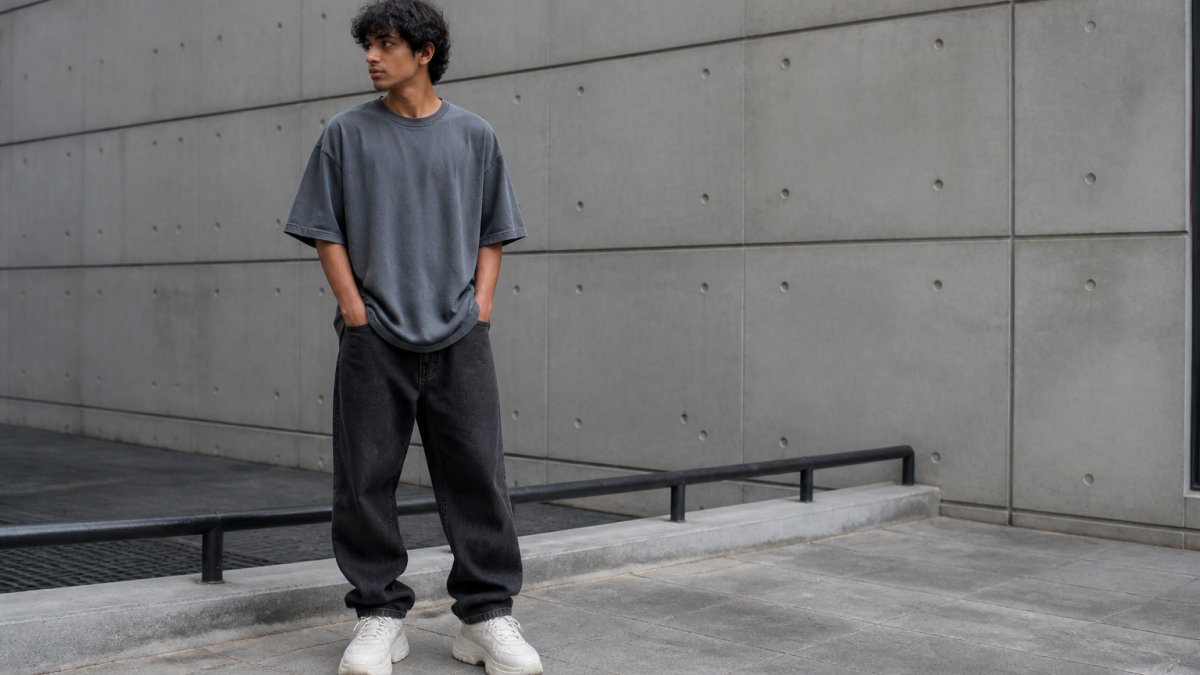
Match sneakers using three rules: proportion, color, and occasion.
Color Coordination and Contrast Rules
Color coordination in streetwear follows two strategies: harmony or contrast.
Harmony approach: Your shoes echo a color already in your outfit, creating a simplified, cohesive look.
Contrast approach: Your shoes introduce a new color that complements your outfit.
Streetwear works best with 2-3 dominant colors plus neutrals. Too many colors create chaos.
Bold colorways work when intentional. A red sneaker should be the only bold color; everything else should support it.
Neutral sneakers (white, black, grey, cream, beige) are your safest choice. They work with almost any color combination and let other pieces shine.
Balancing Shoe Volume With Fit and Proportions
| Shoe Type | Best With | Avoid With |
|---|---|---|
| Chunky runners | Baggy/relaxed denim, oversized tops | Slim jeans, fitted trousers |
| High-tops | Straight-leg jeans, cropped trousers | Oversized pants that hide the shoe |
| Minimalist low-tops | Any silhouette | Very loose clothing that overwhelms them |
Balance volume with volume, or contrast volume with simplicity. High-tops create vertical lines that elongate your silhouette; chunky runners create horizontal lines that feel grounded.
Boots With Streetwear Outfits: Beyond the Sneaker
Not every streetwear outfit needs sneakers. Boots bring edge and maturity to streetwear styling. They work best when your outfit is clean and intentional.
Combat and Lace-Up Boot Styles
Combat boots bring attitude and work best with bold graphics, strong silhouettes, or statement pieces.
Pair combat boots with:
- Relaxed or baggy denim
- Straight-leg trousers
- Oversized jackets
- Bold graphic tees
Combat boots need visual company; with understated outfits they look like you're trying too hard.
Lace-up boots in leather or suede offer more versatility, working with both relaxed and structured silhouettes depending on your desired tone.
Pairing Boots With Relaxed and Baggy Denim
Boots and baggy denim create balanced proportions; heavy footwear with heavy fabric feels intentional.
Crop denim to show the boot collar for a stronger silhouette than letting fabric pile on top.
Boots work best with relaxed or straight-leg denim, oversized or structured tops, and bold elements. They feel out of place in minimal outfits.
Footwear for Different Seasons and Weather
Balance aesthetics with climate functionality when selecting seasonal footwear.
Summer Footwear: Breathability and Visual Lightness
Summer materials: Canvas and cotton allow airflow and dry quickly. Mesh panels prevent moisture buildup. Suede and leather absorb moisture unless treated with water-resistant coatings. Prioritize soles with good traction patterns in extreme heat.
Summer colors: Light colors reflect heat and feel seasonally appropriate. Minimalist silhouettes prevent visual heaviness; avoid chunky runners unless intentional.
Summer practicalities: Breathable linings and moisture-wicking insoles prevent odor. In tropical climates, prioritize quick-drying materials. Consider water-resistant treatments for frequent rain.
Winter Footwear: Insulation, Traction, and Visual Weight
Winter materials: Leather and suede provide insulation when treated with protective coatings. Thicker rubber soles with aggressive tread provide traction. Wool linings provide warmth. Waterproof coatings extend shoe life.
Winter colors: Darker colors feel seasonally appropriate and hide stains. Heavier silhouettes match winter clothing's visual weight.
Winter practicalities: Rinse shoes after walking in treated areas. Prioritize tread depth for traction. Thicker soles and lined uppers provide warmth. Break in new shoes before winter to avoid blisters.
Spring and Fall: Transitional Flexibility
Spring/fall materials: Canvas, leather, and synthetic blends work well. Your regular streetwear sneakers perform fine.
Spring/fall colors: Mid-tone colorways (grey, tan, olive, warm brown, muted blue) bridge seasons and work across multiple times of year.
Spring/fall practicalities: Layering affects shoe choice. Canvas sneakers work in rain if you let them dry. Choose shoes that handle both wet and dry conditions.
Tropical and High-Humidity Climates: Year-Round Considerations
In tropical regions, humidity and moisture constantly affect shoe durability and comfort.
Tropical materials: Canvas and cotton breathe and dry quickly. Mesh panels and synthetic linings wick moisture and resist mildew. Rubber soles with drainage prevent water pooling. Avoid untreated leather.
Maintenance in tropical climates:
- Clean your shoes regularly. Moisture and salt from sweat create an environment for mold and odor. Weekly cleaning extends your shoes' lifespan significantly.
- Air dry completely between wears. Don't store damp shoes in a closed bag or closet. Use a fan or place them in direct sunlight to dry thoroughly.
- Use moisture-absorbing inserts (cedar, activated charcoal, or silica gel) inside shoes when storing them. This prevents mildew and odor.
- Consider antimicrobial treatments designed for tropical climates. These prevent bacterial growth that causes odor in high-humidity environments.
- Replace insoles more frequently. Insoles absorb sweat and break down faster in tropical climates. Fresh insoles improve comfort and reduce odor.
Color and visual approach: Light colors remain practical year-round in tropical climates because they reflect heat. However, they require more frequent cleaning to stay bright. Dark colors hide dirt and sweat stains better but absorb more heat. Choose based on your cleaning commitment and comfort preference.
Weather-Specific Shoe Selection Checklist
For wet conditions:
- Tread depth on soles (minimum 2-3mm for safety)
- Water-resistant or waterproof upper materials
- Quick-drying linings
- Drainage features (holes or channels in soles)
For cold conditions:
- Insulated or lined uppers
- Thick, durable soles
- Traction-focused tread patterns
- Protective coatings against salt and chemicals
For hot/humid conditions:
- Breathable materials (canvas, mesh)
- Perforated or ventilated designs
- Moisture-wicking linings
- Quick-drying construction
For all-season wear:
- Neutral colors that work across seasons
- Versatile materials (canvas, leather blends, synthetics)
- Moderate tread depth (works in most conditions)
- Durable construction that handles varied weather
Making Bold Shoes Your Outfit's Focal Point
Sometimes your shoes are the statement. When you choose a bold sneaker or striking boot, everything else in your outfit should support it.
Bold shoes work when:
- They're the only loud element in your outfit
- Everything else is neutral or tonal
- Your top and bottom are simple and clean
- Your graphics or colors are minimal
If your sneaker is bright red with visible design elements, wear it with black jeans and a simple grey or black tee. Let the shoe be the story.
The rule is simple: one bold element per outfit. If your shoe is the bold element, everything else should be understated.
Minimalist outfits with bold shoes feel intentional and confident. Busy outfits with bold shoes feel chaotic.
Durability and Comfort for All-Day Wear
Premium streetwear sneakers should last.
Look for:
- Reinforced stitching at stress points
- Quality materials that resist creasing
- Durable sole construction
- Breathable linings that prevent moisture buildup
In tropical climates, moisture resistance matters more than in dry regions.
Comfort matters too. A stunning shoe that hurts your feet after two hours isn't a good choice.
Our graphic printing uses techniques that resist cracking and fading through repeated wear and washing.
Maintenance extends your shoes' lifespan. Regular cleaning, proper storage, and occasional conditioning keep materials looking fresh.
Choosing what shoes to wear with streetwear outfits comes down to understanding proportion, color, and occasion.
At 404Wear, we design streetwear that pairs seamlessly with intentional shoe choices.
Frequently Asked Questions
What are the best sneakers for streetwear?
The best sneakers for streetwear depend on your outfit style. Chunky runners and retro basketball-inspired high-tops work well with relaxed denim and oversized tops. Minimalist low-tops suit understated looks and complement bold graphics. Look for sneakers with clean silhouettes, durable construction, and colorways that coordinate with your core pieces. High-top and low-top designs both work equally well in streetwear, it's about balancing the shoe's volume with your overall outfit proportions.
How do you match sneakers with streetwear clothes?
Match sneakers by considering three elements: color coordination, silhouette balance, and outfit hierarchy. If your outfit features a bold graphic tee or statement piece, choose neutral sneaker colorways to avoid visual clutter. With relaxed, baggy denim, chunky sneakers create cohesion, while slim fits pair better with streamlined low-tops. Let one element dominate, either the shoes or the clothing, to maintain a confident, intentional look rather than competing focal points.
Can you wear boots with streetwear outfits?
Yes, boots are excellent for streetwear. Combat boots, lace-up styles, and structured designs pair especially well with relaxed and baggy denim, creating a balanced silhouette. Boots add attitude and structure to loose-fitting pieces, grounding your outfit visually. Choose boots with clean lines and minimal detailing if your top features bold graphics, or opt for textured boots when wearing simple tees. Boots work across seasons and elevate casual streetwear into a more intentional statement.
What should I wear with chunky sneakers?
Chunky sneakers pair best with relaxed silhouettes: baggy jeans, wide-leg trousers, or oversized joggers. Balance the shoe's volume by keeping your upper half relatively simple, a basic tee or fitted long-sleeve layer works well. Chunky runners create a bold visual anchor, so let them be the statement piece rather than competing with graphic tees or patterned clothing. In tropical climates like Sri Lanka's, chunky sneakers in breathable mesh or perforated detailing help manage heat while maintaining streetwear attitude.
How do I choose shoes for different weather and seasons?
In tropical heat, prioritize breathable fabrics like mesh, perforated detailing, and light colorways that reflect heat. Monsoon seasons call for water-resistant sneakers or boots with sealed seams. For cooler evenings, boots and high-tops provide extra coverage and warmth. Year-round in warm climates, sneakers with ventilation and moisture-wicking properties keep feet comfortable during all-day wear. Durable construction matters everywhere, quality stitching and reinforced soles withstand humidity and frequent wear better than lightweight alternatives.

